

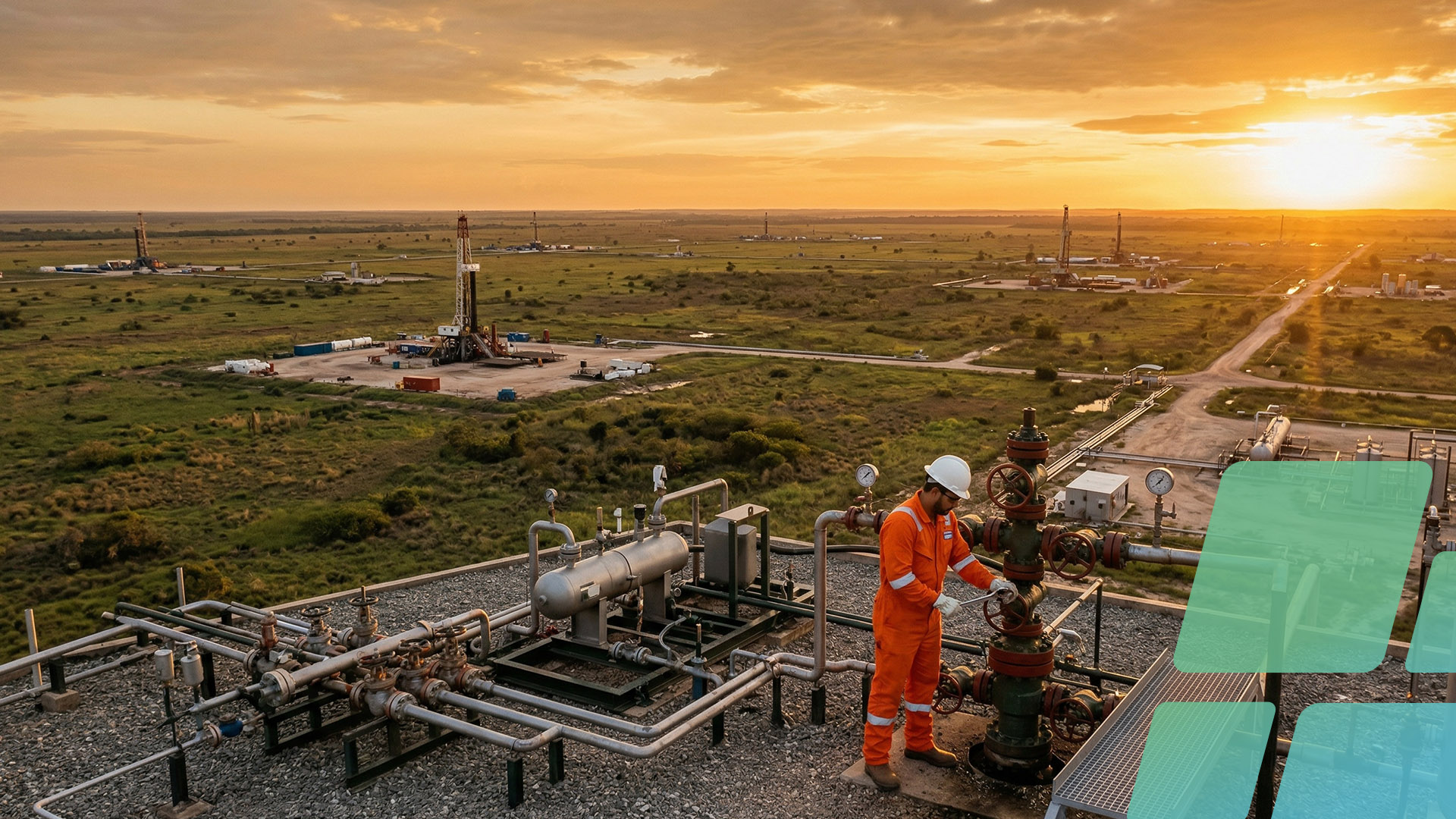
The Orinoco Oil Belt — known in Spanish as the Faja Petrolífera del Orinoco — is the single largest accumulation of heavy crude oil on the planet. Stretching across more than 55,000 square kilometers in southern Venezuela, this extraordinary geological formation holds an estimated 302 billion barrels of recoverable oil, surpassing every other reserve on Earth in sheer scale.
For energy investors, petroleum engineers, and national governments alike, the Orinoco Oil Belt represents both a monumental challenge and an unparalleled opportunity. Its extra-heavy crude requires advanced extraction and upgrading technology — but in return, it offers production horizons measured in decades, not years.
At SERLOFERCA, we operate directly within this formation through our strategic alliance with Anhui Guangda in the Ayacucho 2 Block (Zona 3). This guide offers a comprehensive overview of the Orinoco Belt — its geology, its crude characteristics, its production history, and why it remains the world’s most consequential energy frontier.
Table of Contents
- What Is the Orinoco Oil Belt?
- Geology and Formation
- Crude Oil Characteristics: Extra-Heavy and Bituminous
- The Four Production Zones
- Extraction Technology: How Heavy Oil Is Produced
- Investment Potential and Economic Outlook
- SERLOFERCA and the Ayacucho 2 Block
- Frequently Asked Questions
What Is the Orinoco Oil Belt?
The Orinoco Oil Belt is a sedimentary basin located in the states of Monagas, Anzoátegui, Guárico, and Barinas in Venezuela. It runs parallel to the Orinoco River along a roughly east-west axis, forming a band approximately 600 kilometers long and up to 70 kilometers wide.
The formation was first systematically surveyed in the 1930s, but large-scale technical assessment began in the 1970s and 1980s. In 2011, Venezuela’s state oil company PDVSA officially declared it the world’s largest oil reserve — a designation subsequently confirmed by the Organization of the Petroleum Exporting Countries (OPEC) and the U.S. Energy Information Administration (EIA).
What sets the Orinoco Oil Belt apart is not merely its volume, but its unique combination of scale, geological stability, and proximity to export infrastructure. Unlike deep offshore reserves or Arctic formations, the Belt sits in accessible onshore terrain — making it technically and economically viable with the right technology and operational expertise.
Geology and Formation of the Orinoco Oil Belt
The Orinoco Oil Belt is classified as a heavy and extra-heavy oil (EHO) and natural bitumen deposit. Its formation is the result of millions of years of geological processes, including the migration of lighter crude from the Andean foothills eastward into the Eastern Venezuela Basin, where it became biodegraded and altered into the dense, viscous form we find today.
Key geological characteristics include:
- Reservoir depth: Typically 800 to 1,500 meters below surface — shallow enough to reduce drilling costs significantly compared to deep-water projects.
- Reservoir rock: Primarily unconsolidated sands of the Oficina Formation, which offer high porosity (20–35%) and permeability.
- Oil gravity: Ranges from 7° to 16° API — classified as extra-heavy crude and natural bitumen.
- Viscosity: 1,000 to over 10,000 centipoise at reservoir temperature — requiring thermal or dilution methods for efficient flow.
- Sulfur content: Relatively high at 3–4%, which requires upgrading before export.
The relatively shallow depth of the Orinoco Belt reservoir is one of its most commercially attractive features. Drilling wells to 800–1,200 meters is far less capital-intensive than deepwater projects, which often reach 3,000+ meters. This geological advantage translates directly into lower per-barrel development costs and faster payback periods for investors.
Crude Oil Characteristics: Extra-Heavy and Bituminous
The crude produced in the Orinoco Oil Belt is categorized as extra-heavy crude oil — specifically the internationally traded blend known as Merey-16. This benchmark blend is a mixture of diluted extra-heavy Orinoco crude and light crude, resulting in a marketable product with approximately 16° API gravity.
Understanding the distinction between crude types is essential for evaluating Orinoco production economics:
| Crude Type | API Gravity | Viscosity | Orinoco Role |
|---|---|---|---|
| Extra-Heavy Crude | 7° – 10° API | > 10,000 cP | Raw reservoir crude |
| Merey-16 Blend | ~16° API | ~500–800 cP | Export benchmark |
| Upgraded Synthetic | 25° – 32° API | < 100 cP | Upgrader output |
| Brent / WTI | 38° – 42° API | < 10 cP | Global benchmark |
Merey-16 trades at a discount to Brent crude — typically $10 to $18 per barrel below the benchmark. However, this discount is more than offset by the massive volume potential of the Orinoco reserves and the relatively low well development costs. Gulf Coast refineries, particularly in Texas and Louisiana, are specifically configured to process heavy and extra-heavy crude, making the United States the natural primary export destination for Orinoco production.
The Four Production Zones of the Orinoco Oil Belt
Venezuela’s national oil company PDVSA, through its subsidiary CVP (Corporación Venezolana del Petróleo), has divided the Orinoco Oil Belt into four major development zones, each with its own characteristics, operators, and production profile:
- Boyacá Zone (West): Located near the Apure River basin. Lower reservoir temperatures and higher viscosities require more intensive thermal EOR. Exploratory activity has expanded significantly since 2015.
- Junín Zone: One of the most actively developed zones. Host to several major joint ventures with international operators. Junín 5, 6, and 10 blocks have been focal points for Chinese and Russian investment.
- Ayacucho Zone (Central): Considered the most technically mature zone of the belt. Ayacucho hosts blocks 1 through 8, with Ayacucho 2 being operated by SERLOFERCA in alliance with Anhui Guangda. This zone features excellent reservoir porosity and permeability characteristics, particularly in Zona 3.
- Carabobo Zone (East): The easternmost development area, nearest to existing PDVSA export infrastructure in the Jose Terminal complex. Carabobo 1, 2, and 3 have been central to PDVSA’s production recovery strategy.
Together, these four zones represent one of the most significant concentrations of undeveloped hydrocarbon resources in the world. Current production across the belt operates at a fraction of its technical potential — creating substantial upside for operators and investors with the capital and technical expertise to develop it responsibly.
Extraction Technology: How Extra-Heavy Oil Is Produced from the Orinoco Belt
Extracting extra-heavy crude from the Orinoco Oil Belt requires a fundamentally different technical approach compared to conventional oil production. The extremely high viscosity of the reservoir crude means it will not flow to the surface under natural pressure alone. Three primary production methods are deployed in the Belt:
1. Thermal Enhanced Oil Recovery (EOR) — Steam Injection
Thermal EOR is the dominant production method in the Orinoco Belt. By injecting high-pressure steam into the reservoir, operators dramatically reduce crude viscosity — enabling it to flow toward production wells at commercially viable rates.
Large-scale steam generators at the surface produce and inject steam continuously. A single centralized generator serving multiple wellpads — known as a cluster or macolla configuration — can reduce operating costs per barrel by up to 15% compared to individual unit installations.
2. Artificial Lift Systems — BES and Rod Pumps
Once crude viscosity has been reduced sufficiently, Electrosumergible Pump (BES/ESP) systems or rod pumps are deployed downhole to lift the oil to the surface. These systems are specifically engineered for high-viscosity, high-temperature conditions characteristic of thermal EOR wells.
Well completion design, pump selection, and artificial lift optimization are critical factors in maximizing per-well production rates and minimizing non-productive time (NPT).
3. Gas Injection and Enhanced Recovery
In specific reservoir conditions, gas injection is used as a secondary or tertiary recovery method to maintain reservoir pressure, displace additional crude toward production wells, and improve overall recovery factors. Advanced gas injection protocols — combined with thermal stimulation — can yield meaningful incremental production uplift compared to steam-only approaches.
The combination of these three methods, properly engineered for each reservoir block’s specific geological characteristics, determines the ultimate recovery factor — which in the Orinoco Belt typically ranges from 8% to 25% of original oil in place (OOIP), depending on the technology applied and operational discipline maintained.
Investment Potential and Economic Outlook for the Orinoco Oil Belt
The economic case for Orinoco Oil Belt investment is built on four structural advantages that few energy projects in the world can match:
1. Unmatched Reserve Scale. With over 302 billion barrels of technically recoverable reserves, the Orinoco Belt offers production horizons that extend well beyond the typical 20–25 year project lifecycle. Unlike conventional fields that decline sharply after peak production, well-managed heavy oil projects with active EOR programs can maintain stable plateau production for decades.
2. Relatively Low Development Cost Per Barrel. Shallow reservoir depth (800–1,500 meters) and unconsolidated sand reservoirs reduce drilling and completion costs significantly compared to deepwater or tight oil plays. Horizontal wells with extended reach can drain multiple reservoir targets from a single surface location — maximizing production per well and minimizing surface footprint.
3. Established Export Markets. Gulf Coast refineries are specifically configured to process Merey-16 and similar extra-heavy crudes. With 5-year offtake contracts providing price certainty and a direct FOB lifting mechanism, Orinoco operators can establish reliable, bankable revenue streams.
4. Regulatory and Legal Framework. Venezuela’s Ley de Reforma de la Ley Orgánica de Hidrocarburos (Gaceta Oficial N° 6.978, January 2026) — specifically Articles 1 and 8 — has introduced significant improvements in contractual transparency, private ownership of the hydrocarbon molecule, and international arbitration access. This legal modernization, combined with OFAC compliance structures under General Licenses 44A, 47, and 48, has substantially reduced the sovereign risk profile for qualified international investors.
The modular investment model — developing one wellpad (macolla) at a time with a Cost Oil recovery mechanism — allows investors to enter the Orinoco Belt with defined capital commitments, clear payback timelines, and graduated exposure to a multi-decade production asset.
SERLOFERCA and the Ayacucho 2 Block: Operating at the Heart of the Orinoco Belt
SERLOFERCA — Servicios López Fermín Corp. — operates the Ayacucho 2 Block, Zona 3 of the Orinoco Oil Belt through a Master Strategic Association Contract with Anhui Guangda Mining Investment Co., Ltd., Sucursal Venezuela (AGDG).
The scope of our Ayacucho 2 operations includes:
- 6 macollas (wellpads) across Zona 3, Campo Ayacucho 2
- 90+ horizontal wells designed for Merey-16 extra-heavy crude production
- Target production: 18,000 BPD (3,000 BPD per macolla at plateau)
- Thermal EOR: Centralized steam generation serving multiple cluster configurations
- Contract term: 23–25 years from date of first commercial production
- Cost Oil mechanism: 70% of net crude assigned to capital recovery during the first 36 months
- Profit Oil distribution: 50/50 pre-payout; 35/65 (SERLOFERCA/AGDG) post-payout
Our operational approach integrates SERLOFERCA’s three decades of Venezuelan field experience with the financial and technical capabilities of our international partners. Every phase of execution — from geodesic surveying and wellpad construction through drilling, completion, and production optimization — is carried out under API/ASME international standards and PDVSA-aligned HSE protocols.
The EIA’s Venezuela Country Analysis Brief provides an independent assessment of production capacity and reserve estimates that further contextualizes the opportunity scale of Orinoco Belt development projects like Ayacucho 2.
Frequently Asked Questions About the Orinoco Oil Belt
How much oil does the Orinoco Oil Belt contain?
The Orinoco Oil Belt contains an estimated 302 billion barrels of technically recoverable extra-heavy crude oil and bitumen, making it the world’s largest single oil reserve. This figure is recognized by OPEC, the U.S. Energy Information Administration (EIA), and Venezuela’s PDVSA. In addition, total oil in place is estimated at over 1.3 trillion barrels — meaning that technological advances in recovery rates could substantially increase the recoverable volume over time.
What is the difference between the Orinoco Belt and conventional oil reserves?
Conventional oil reserves contain lighter crude (typically 30–45° API) that flows naturally to surface under reservoir pressure. The Orinoco Oil Belt produces extra-heavy crude (7–16° API) with viscosities thousands of times higher than conventional crude. This means it requires specialized production methods — primarily thermal EOR (steam injection), artificial lift systems, and dilution or upgrading before pipeline transport and export. The tradeoff is that Orinoco wells are shallower, cheaper to drill, and tap into a far larger resource base.
What is Merey-16 crude oil?
Merey-16 is Venezuela’s primary export crude blend from the Orinoco Oil Belt. It is produced by mixing extra-heavy crude (7–10° API) from the Belt with lighter crude or naphtha diluent to achieve approximately 16° API gravity and 3.6% sulfur content. This blend meets the specifications of Gulf Coast heavy oil refineries and is actively traded on international markets. It typically trades at a discount of $10–$18 per barrel below the Brent benchmark, reflecting its processing requirements.
What is the Ayacucho zone in the Orinoco Belt?
The Ayacucho zone is one of the four development areas of the Orinoco Oil Belt, located in the central section of the Belt in Estado Anzoátegui. It is divided into numbered blocks (Ayacucho 1 through 8). The Ayacucho zone is considered technically mature, with well-characterized reservoirs, favorable porosity and permeability, and an established logistics and infrastructure corridor. SERLOFERCA currently operates Bloque Ayacucho 2, Zona 3, under a 25-year strategic alliance with Anhui Guangda Mining Investment Co.
Is investing in Orinoco Oil Belt projects viable for international investors?
Yes, under the right legal and operational structure. The 2026 reform of Venezuela’s Hydrocarbons Law introduced provisions for private molecular ownership (Article 57 LOH), international arbitration under ICC rules (Paris/Panama), and contracts governed by New York State law. Combined with OFAC compliance under General Licenses 44A, 47, and 48, and a Cost Oil recovery mechanism that prioritizes 70% of net crude toward capital repayment, qualified international investors can now access Orinoco Belt opportunities with substantially reduced sovereign risk and clear contractual protection.
Conclusion: The Orinoco Oil Belt and the Future of Heavy Oil
The Orinoco Oil Belt is not simply a geological curiosity — it is the defining energy asset of the 21st century. With over 300 billion barrels of recoverable crude, shallow reservoir depths, improving legal frameworks, and advancing thermal EOR technology, the Belt offers a unique convergence of resource scale and investment accessibility.
The key to unlocking its value lies in operational expertise, technical discipline, and structurally sound investment vehicles. SERLOFERCA has built both over 30 years of continuous work in the Venezuelan energy sector — and today, through the Ayacucho 2 Block, we are translating that experience into a world-class heavy oil development project.
DE
Douglas Espinoza
Business Development Manager, SERLOFERCA — Servicios López Fermín Corp.
With over two decades of experience in Venezuela’s petroleum sector, Douglas leads SERLOFERCA’s strategic partnerships and international investment structuring, including the Ayacucho 2 Block development and the Programa Apex 250.