

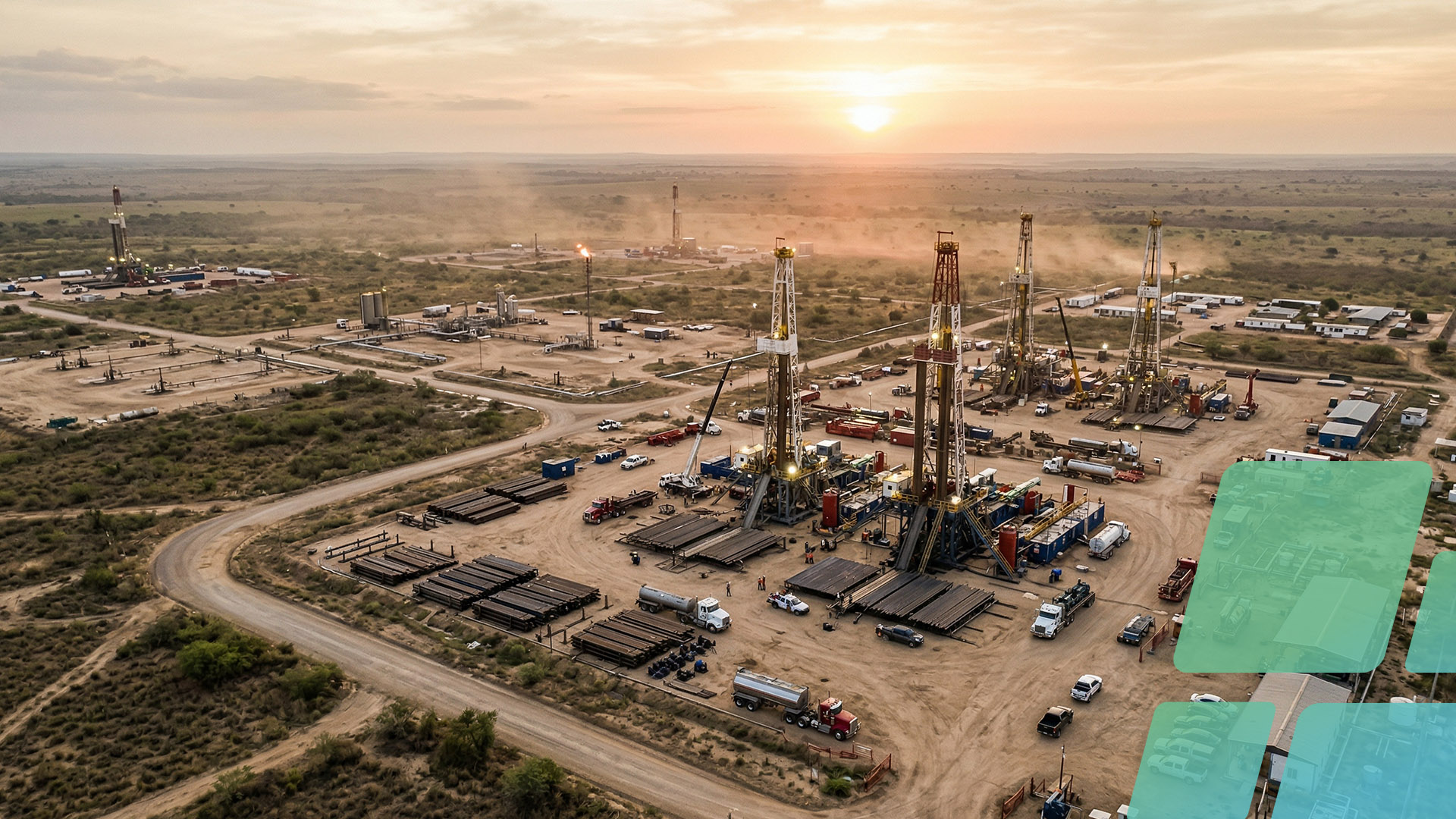
Energy investment opportunity Venezuela is no longer just a contrarian headline. It is becoming a serious operational conversation again for investors, operators, and service companies willing to evaluate the country with discipline instead of emotion. From Anaco in Estado Anzoátegui to the refining and logistics corridor around Puerto La Cruz, the question is no longer whether Venezuela has hydrocarbons. The real question is whether the market now has enough legal, technical, and execution capacity to turn reserves into investable projects.
That is where the conversation becomes practical. A true energy investment opportunity Venezuela depends on more than reserves underground. It depends on drilling services, field logistics, refining access, compliant commercial structures, and reliable local partners that understand how to execute in Venezuelan conditions. In that sense, the reactivation story is not only about policy. It is also about who can actually build, operate, maintain, and scale projects on the ground.
Table of Contents
- Why the market is reopening
- Why Anaco and Puerto La Cruz matter
- Why drilling and field services will decide execution
- What investors should evaluate before entering
- Why execution partners matter more than headlines
- Frequently asked questions
Why Energy Investment Opportunity Venezuela Is Back on the Radar
For years, Venezuela’s petroleum narrative was dominated by decline, sanctions, deferred maintenance, and legal uncertainty. That is precisely why the current reopening matters. The market is seeing early signals that the investment environment is shifting from frozen potential to selective reactivation. New legal flexibility, greater room for private operators, and improving export flows are changing how sophisticated investors look at the country.
What makes this energy investment opportunity Venezuela especially relevant is the combination of resource scale and operational urgency. Venezuela still holds one of the largest reserve bases in the world, especially in extra-heavy crude. At the same time, the country needs infrastructure recovery, field optimization, workovers, well reactivation, logistics support, and reliable engineering execution. That creates room not only for capital providers, but also for technical companies that can convert capital into barrels, uptime, and revenue.
In practice, this means the upside is not limited to one type of player. Equity investors may see value in long-cycle upstream assets. Service contractors may find immediate demand in reactivation scopes. EPC players may benefit from surface facilities, tank farms, compression, and flowline projects. Trading-oriented investors may also watch the relationship between crude lifting, refinery recovery, and export logistics more closely than before.
For broader context, readers can review the latest U.S. Energy Information Administration overview of Venezuela and the site’s own analysis of the Orinoco Oil Belt.
Anaco and Puerto La Cruz Give Energy Investment Opportunity Venezuela a Real Operating Geography
Any credible discussion of energy investment opportunity Venezuela should move beyond abstract macro language and focus on geography. In eastern Venezuela, Anaco and Puerto La Cruz represent two very different but complementary dimensions of petroleum reactivation.
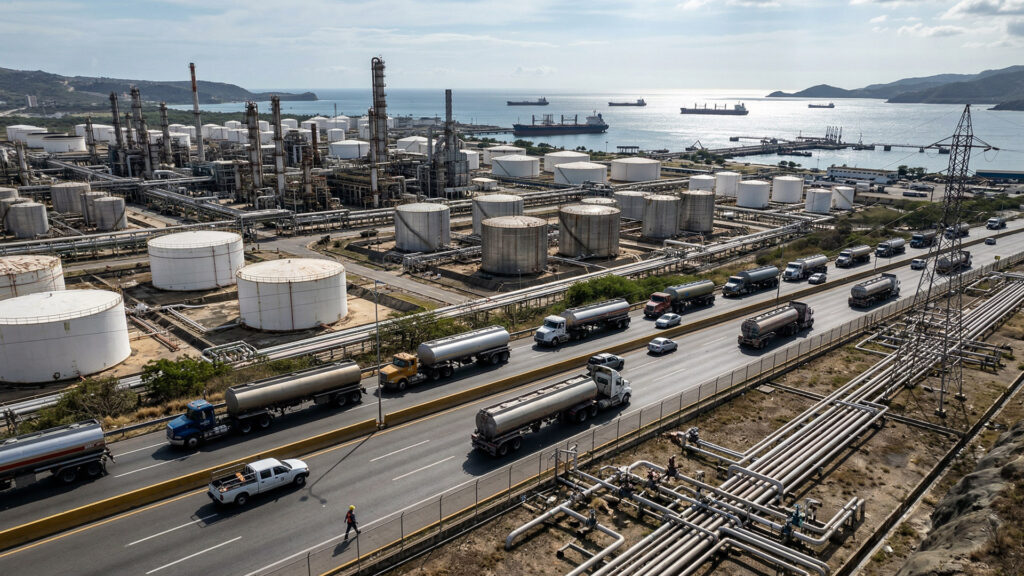
Anaco has long been associated with oil and gas operations in Anzoátegui and remains strategically relevant for field-based execution, engineering coordination, equipment movement, staffing, and operational management. It is also central to SERLOFERCA’s identity and operating history. Puerto La Cruz, by contrast, adds downstream and logistics significance. When refining activity and coastal movements improve there, the effect is felt well beyond one city. It influences supply chains, fuel availability, blending, transport planning, and investor confidence in the eastern corridor.
That is why regional positioning matters. Investors rarely succeed by treating Venezuela as a single undifferentiated market. The better approach is to identify productive corridors, understand what kind of asset or service they require, and partner with operators that already know the terrain. Eastern Venezuela is not just a map reference. It is one of the places where capital, technical services, and industrial infrastructure can meet in a more actionable way.
If you want the institutional background behind that positioning, see About SERLOFERCA and the company’s current investment and legal framework article.
Oil Well Drilling Services Venezuela Will Decide Who Can Actually Execute
The market can attract headlines quickly, but only oil well drilling services Venezuela can turn reactivation into measurable field performance. That includes drilling, workovers, well control systems, pressure equipment, completions support, rig mobilization, camp setup, fluid handling, transport coordination, and field maintenance. Without these layers of execution, the reopening remains theoretical.
This is why oil well drilling services Venezuela matter so much in the current cycle. Venezuela does not simply need new interest. It needs re-entry capability. Mature fields require intervention. Idle assets need technical diagnosis. Surface constraints must be solved before subsurface potential can be monetized. In many cases, the first economic gains will not come from entirely new exploration blocks, but from restoring productivity in known producing environments.
That operational reality creates opportunity for companies that already understand upstream execution. Investors looking at field reactivation should not evaluate only reserves and law. They should evaluate service readiness. Who can mobilize equipment? Who can maintain safety and HSE discipline? Who can source materials under pressure? Who can coordinate field operations from wellsite to export corridor? Those questions often matter more than a headline-grabbing macro announcement.
The most attractive projects are often the ones where oil well drilling services Venezuela, logistics, engineering, and commercial structure already speak to each other. When those layers are integrated, capital has a better chance of moving efficiently. When they are fragmented, delays and hidden costs tend to multiply.
For reference on international technical frameworks, it is useful to review API standards for the oil and gas industry and ASME codes and standards, especially when evaluating how service providers present drilling, piping, pressure, and surface-facility capabilities.
How to Evaluate an Energy Investment Opportunity Venezuela Without Ignoring the Real Risks
A smart investor should approach energy investment opportunity Venezuela with optimism and friction in the same model. The opportunity is real, but so are the constraints. The strongest projects are not the ones that ignore risk. They are the ones that price risk correctly, structure contracts intelligently, and select local execution partners carefully.
There are five practical filters worth applying. First, legal enforceability: investors need clarity on governing law, arbitration, commercial rights, and the role of local versus international counterparties. Second, operational feasibility: field access, service availability, workforce readiness, and logistics discipline are essential. Third, fiscal visibility: returns must still make sense after royalties, taxes, transport, blending, and recovery timelines. Fourth, infrastructure reality: even a strong upstream asset can underperform if export, power, or refining bottlenecks are ignored. Fifth, partner quality: the best structure on paper can fail if the local operator cannot execute.
In other words, the most compelling energy investment opportunity Venezuela is rarely the loudest one. It is the one where legal architecture, operating experience, and asset-level discipline are aligned from day one. Investors who understand that difference are more likely to identify bankable opportunities instead of speculative noise.
Why Execution Partners Matter More Than Headlines
Markets reopen in phases. First comes narrative. Then comes legal change. After that comes the difficult stage: execution. That is the stage where oil and gas services Venezuela providers become central to the investment thesis. A project needs more than capital to move. It needs field intelligence, engineering depth, procurement discipline, and teams that understand how to operate under real Venezuelan conditions.
SERLOFERCA’s positioning is relevant here because it sits at the intersection of local origin and international structure. The company was founded in Anaco and presents itself as an integrated energy services group with experience across upstream operations, EPC support, logistics, and investor-facing energy development. For investors, that kind of profile can be valuable because it bridges two worlds: local operating reality and international commercial expectations.
If the goal is to evaluate a project, request technical support, or discuss partnership pathways, the most useful next step is not guesswork. It is direct conversation. Explore SERLOFERCA’s homepage, review the company’s institutional profile in About Us, and use the Contact Us page to open a serious discussion.
Conclusion
Energy investment opportunity Venezuela is reopening, but it is reopening unevenly. The projects most likely to succeed will be the ones grounded in asset reality, operational discipline, and strong execution partners. In eastern Venezuela, especially around Anaco and Puerto La Cruz, the investment conversation is becoming more concrete because the region combines field activity, logistics relevance, and industrial infrastructure. For investors and operators who understand both the upside and the friction, this may be the right time to look again at Venezuela with sharper questions and better criteria.
Frequently Asked Questions
Why is energy investment opportunity Venezuela gaining attention again?
Because the market is showing a combination of legal movement, improving export activity, refining recovery, and renewed demand for field execution. Investors are starting to see Venezuela not only as a reserves story, but as a reactivation story.
Why are Anaco and Puerto La Cruz important in this conversation?
Anaco matters because of its historical and operational relevance to the energy sector in eastern Venezuela. Puerto La Cruz matters because refining, fuel processing, and coastal logistics influence how efficiently the regional petroleum system can function.
How important are oil well drilling services Venezuela in the current cycle?
They are essential. Oil well drilling services Venezuela are the bridge between capital and production. Without drilling, workover, pressure control, logistics, and field support capabilities, reactivation remains a concept instead of an operating reality.
Is this mainly an upstream story or a broader energy infrastructure story?
It is broader. The strongest opportunities may involve upstream production, but they also depend on midstream support, refining access, power reliability, logistics, procurement, and commercial compliance.
What should an investor do before entering the Venezuelan oil market?
Review legal structure, contract enforceability, partner quality, infrastructure constraints, service readiness, and commercial exit routes. The best opportunities are usually the ones that combine strong geology with credible execution.